
Emergency and Storm Tree Removal
Trunks and limbs down on roofs, cars, fences and driveways, cleared in whatever sequence the damage calls for, with photos kept for the insurer.
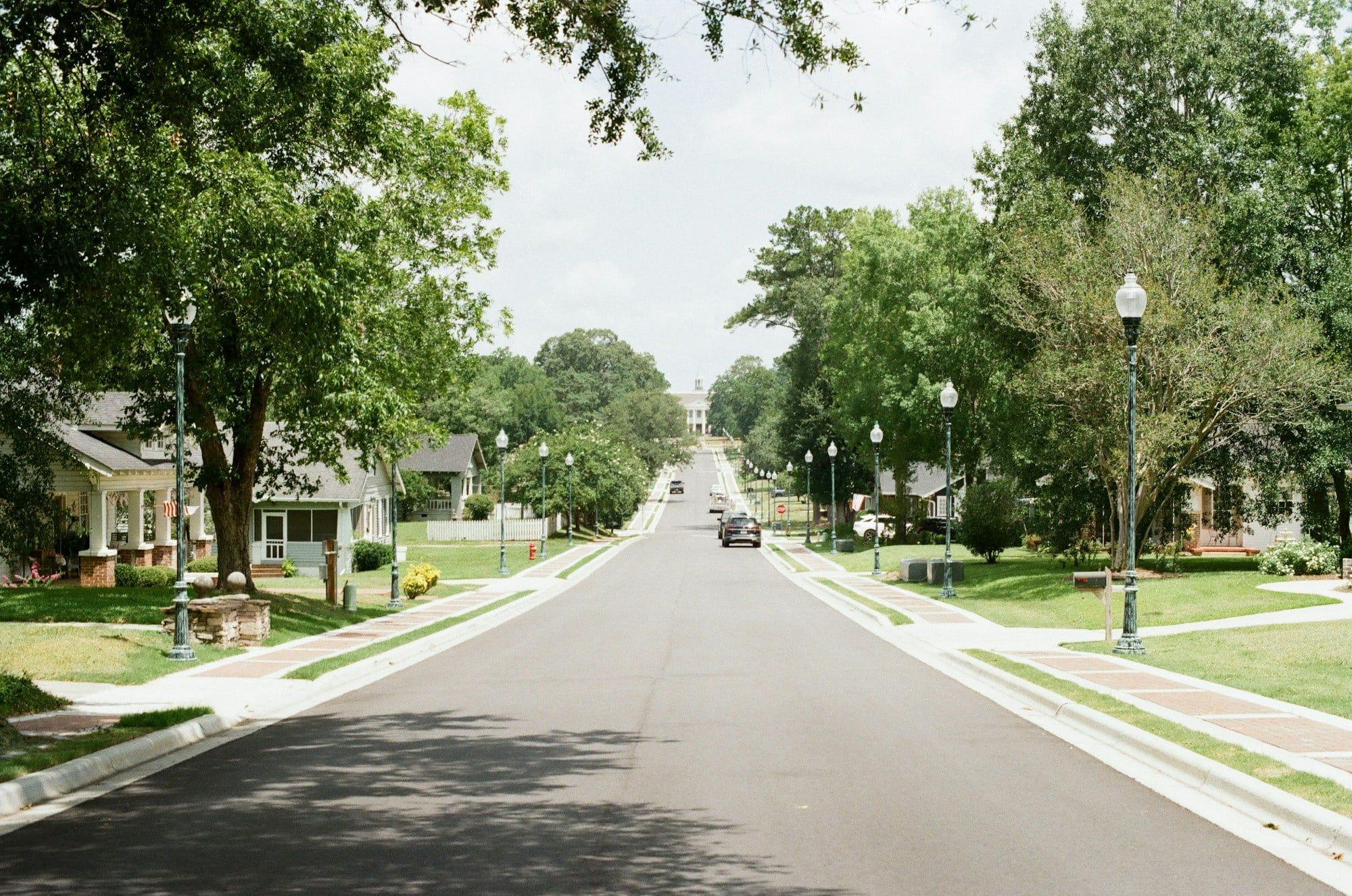
Mishawaka Local Tree Service offers tree service in Wakarusa, IN, and that means tree removal in Wakarusa, plus tree trimming and stump grinding, for village homes, farm lots and the businesses out along State Road 19.
Request a quote
Give us your street and what worries you about the tree. We will call you back.
Wakarusa has had two hard storms in six years. In August 2020 an EF-1 tornado tore through trees southwest of town, and in August 2026 the derecho put a large tree down in Wakarusa itself. A tree that rode out one storm with a cracked fork can fail in the next. Those trees are the first ones to check.
More than eight in ten Wakarusa homes are lived in by their owners. A tree here usually has the same family looking after it for decades, so pruning that pays off over ten years makes sense.
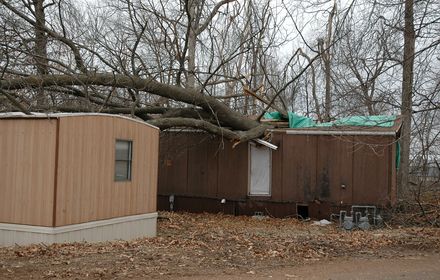
About one home in eight in town is a manufactured home. The roof is lighter than on a framed house, so a limb that would only dent shingles can go right through. Heavy limbs over one get shortened or taken off first.
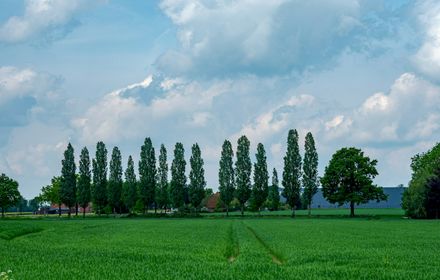
Many farms around Wakarusa have tree rows planted to stop wind and drifting snow. Over the years, dead trunks end up hidden among the live ones. We take out the dead trees and the leaning ones, and the row stays standing.
A quarter of the houses in Wakarusa went up before 1940. The maples planted beside them on the older streets are now some of the biggest trees in town, and at that age some have gone hollow low in the trunk. Hollow doesn’t always mean weak. A thick shell of sound wood can hold for years, so we tap the trunk with a mallet and check how thick that wall is before we say whether the tree stays. Thin shell and a heavy crown over the roof, it comes down. A sound shell may only need the dead wood cut out and the crown lightened.
Almost one home in five in Wakarusa was built in the 1990s. The trees that went in with them are 30 years old now, and they’ve reached the roofs and gutters. Branches that rub a roof wear down the shingles. They also fill the gutters with leaves. So we cut those limbs back to a side branch, which keeps the tree’s shape and gives the roof six feet of room or more.
On many lots the wire from the pole to the house runs through the backyard, and a tree planted beside it decades ago has grown up around it. The utility trims along its main lines. The drop to your house is often left to you. We prune clear of the drop when that’s safe, and when a limb is resting on the wire, we call the utility to cut the power first.
We also serve Osceola, IN, north in St. Joseph County, on the river just east of Mishawaka.
Wakarusa has a population of about 2,006. Here is what that means for the work we do here.
| Local fact | Detail |
|---|---|
| Owners | 85.2% of the town's 833 homes are owner-occupied, 75.3% single-family detached. |
| Pre-1940 houses | 24.7% built in 1939 or earlier, 18.0% in the 1950s and 17.9% in the 1990s. |
| Manufactured homes | 12.7% of homes in town are mobile or manufactured homes. |
| August 10, 2020 tornado | An EF-1 near 110 mph on a 2.5-mile path starting 6 miles southwest of town. |
| August 11, 2026 derecho | A large tree came down in Wakarusa at 1:15 pm. |
| County | Elkhart County; the village was first called Salem and took the name Wakarusa in 1859. |
Trunks and limbs down on roofs, cars, fences and driveways, cleared in whatever sequence the damage calls for, with photos kept for the insurer.
A walk-around inspection of the maple or oak you lie awake over, ranked as prune, cable, watch or remove, plus cables for sound trunks with weak forks.
Thickets, wild fence rows and wooded lots cleared in Mishawaka, with the property line and buried lines settled before a machine rolls in.
Big trees over roofs, brittle ash and boxed-in back yards taken down in sections by crane around Mishawaka, with the street, the lines and the lawn checked first.
Bare ash, split forks, hollow stems and hanging deadwood, taken down by climber, lift or crane once we know what each one could land on.
Give us the street, what kind of tree it is if you know, and what it stands near: the house, a fence, the lines. Expect a callback with a rough range and the things that could change it.
It can be. Torn roots or a crack inside a fork may not show right away. Watch for a lean that keeps growing, a split that gets wider, dead branches on one side, or mushrooms at the root flare.
It depends on the tree. A tree with limbs reaching over the roof is worth a look, and a big tree growing right beside the home can shift the piers underneath it with its roots.
Yes. When there is no room to fell it, we take it apart in pieces and lower them on ropes away from the roof. A barn roof gets the same care as a house.
Yes. We keep trucks and the stump grinder off the tank and the drain field. Tell us where they are, or we mark them with you first. A tree near the field can still come out by hand.
Yes. We prune and remove trees for churches, shops and offices, and schedule the work around services and business hours.
Yes. We grind it below the surface and rake the chips out, so the ground can be leveled for a slab or blocks. Tell us the depth the builder needs.
Call (574) 227-6183 for the quickest answer, or tell us about the tree here and we will phone you.