
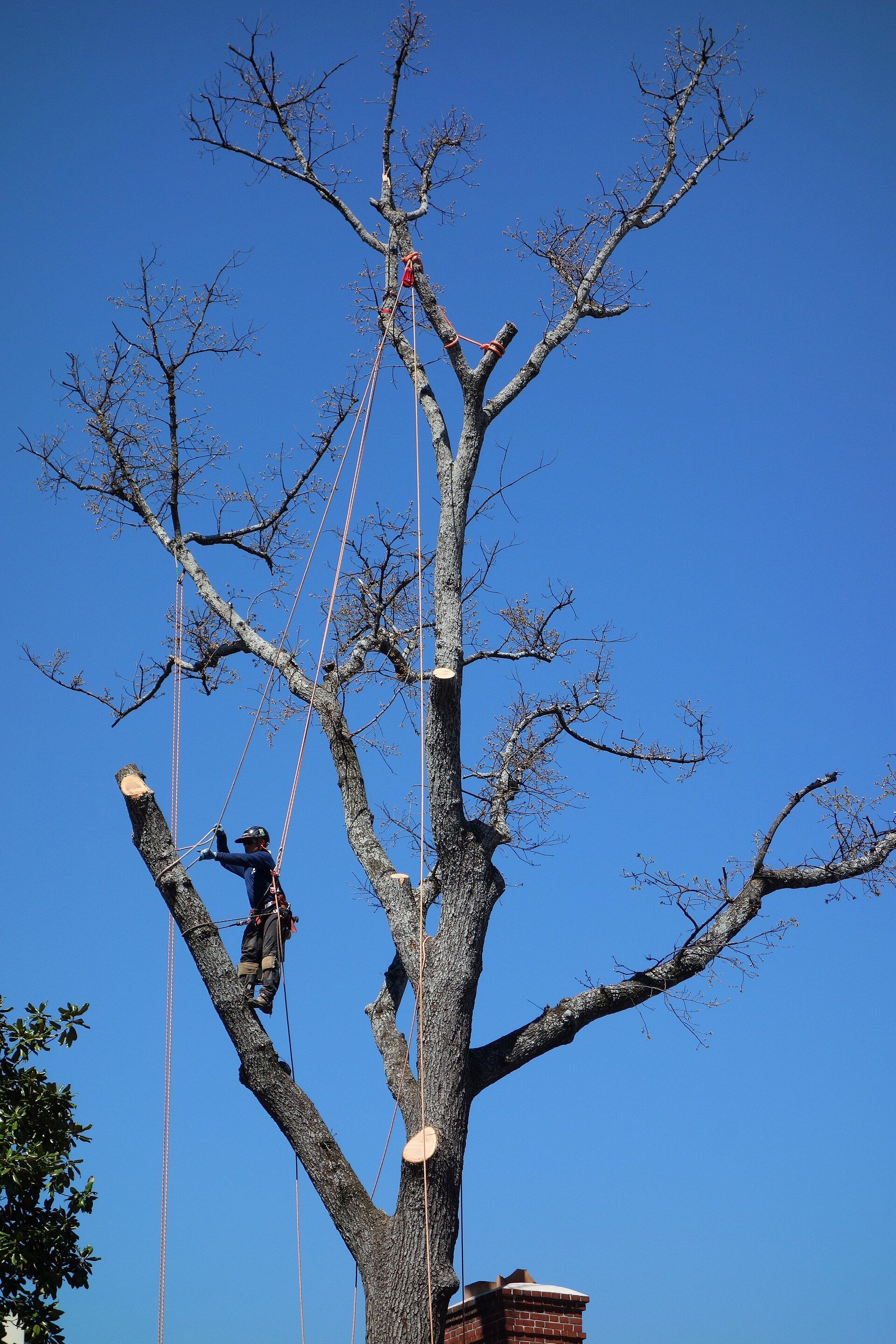
Dead and Hazardous Tree Removal in Mishawaka, IN
Mishawaka Local Tree Service takes down dead and hazardous trees across Mishawaka, from a bare ash beside the garage to a maple whose fork has started to open. Before any price, we check what the stem could hit and whose land it stands on, and whether a climber can still trust its wood. We also handle dead trees in Granger, Osceola, Simonton Lake, Elkhart, Edwardsburg and Bremen.
Request a quote
Give us your street and what worries you about the tree. We will call you back.
When dead wood dries out, it becomes more fragile month over month. And if it's more than 20% bare, crews would not risk climbing it themselves. Then they need to call for a machine, which would be extra. So waiting would just cost you more.
- What the stem could hit, mapped before the method is picked
- Aerial lift or crane once climbing stops being safe
- Deadwood pruned out while the stem itself is solid
- City permit filed for parkway trees
- Wood left as rounds or hauled, priced both ways
Estimate a dead tree
Typical prices per tree for Mishawaka jobs. Your quote follows a look at the job.
$460 to $870
Call (574) 227-6183 for your priceAt a glance
| Sound 60 ft tree | $680 to $1,310 to remove |
|---|---|
| Ash removal | $650 to $2,000 a tree |
| Ash already dead | About 3 times a healthy one; infested about 2 times |
| Risk check first | $100 to $250 a tree |
| Written report | $150 to $450 per tree |
| Curb strip trees | Tree Work Permit from the city before cutting |
Kinds of Dead and Hazardous Tree Removal
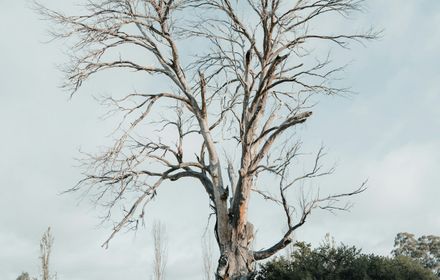
Standing Dead Ash
The ash borer is a beetle that was first found in Indiana around 2004. It leaves larvae that feed under the bark, which causes the tree to start rotting. If an infested tree is near the house, it requires a bucket lift to be removed, because it is unsafe for the tree crew to climb on it.
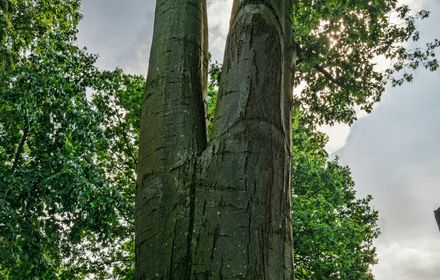
Trees Splitting at the Fork
A fresh crack running down from a tight fork means the seam is tearing, and a fork already gaping, with wet dark wood showing, usually has to go.
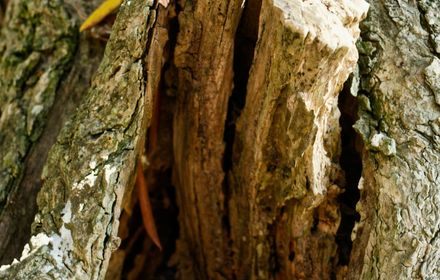
Hollow and Rotting Trunks
Shelf fungus on the bark, a hole big enough for your fist, or bark peeling off in sheets all mean rot inside. Cracks, cavities, bare patches and root fungus are all worth an inspection. Tapping the bark finds the hollow, and a probe measures how much solid shell remains.
Dead Limbs Over Roofs and Driveways
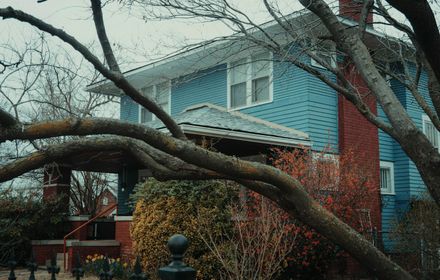
Not every hazard calls for a removal. A healthy oak carrying two dead limbs above the garage just needs those limbs taken back to live wood and lowered by line, for a fraction of what felling costs. Snapped branches lodged up high come down during that visit too.
Trees With a New Lean
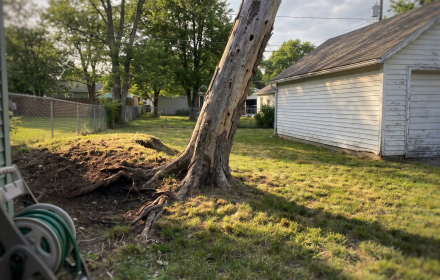
An old tilt is normal, but a dead tree whose lean changed is losing its roots and goes first.
Other Hazard Calls
Dead Trees Near Utility Lines
Inside Mishawaka, the city's own utility clears its wires. A dead stem close to one is left alone until the utility says go.
Brittle Silver Maple Limbs
The Morton Arboretum calls silver maple weak-wooded and prone to storm damage, so its long limbs above shingles can snap while it is still alive.
Signs a Tree Has Become a Hazard
There are a few signs that would tell you. Mainly, if half of the branches are dead, then it’s most likely not alive anymore, will become dead wood and can fall due to strong winds. Plus, if there are any targets around it, such as your property or vehicle, then it can also be a hazardous one. Also, if it has started to lean more than 15 degrees, that’s also a good sign that something is not right with the tree, and it can be a hazardous one.
Any tree leaning toward the house, garage, driveway or anything that can get damaged if it went down or dropped limbs should be attended to right away, before any damage occurs.
Prune the Dead Limbs or Take the Trunk
When deadwood sits high in the canopy and the stem sounds solid, pruning is the honest answer. Dead limbs come out, broken hangers come down, and the maple gets another season or ten. We’d rather prune a maple twice than fell one that had years left in it. Rot inside the stem, at its base or in the fork is different. No trimming fixes that, and removing it now costs less than after a limb comes through your ceiling.
Honestly, we would avoid removing it all if it just has those limbs. We would just trim those, maybe apply some medicine if it’s possible, and keep it this way. It’s not worth paying for an entire tree removal and replanting.
Your Tree, the City’s or a Neighbor’s
Start with whose ground it stands on. Anything in your own yard is yours to remove, with no city application. Curb-strip trees need the city’s permit first. A dying ash next door is the neighbor’s to take down. An owner who ignored a dying one may be liable once it falls, so a dated note to them is the place to begin.
How a Hazardous Tree Comes Down
Dead wood behaves like a dry pencil. It holds until it snaps, with no bend first to warn anyone. Every step below assumes it.
Walk the drop zone
Before any price, we list everything within one trunk length. Shingles, fences, the neighbor’s garage and the wires all get named, plus where a truck can park without crossing soft lawn.
Decide who can go up
Healthy wood gets a climber. A bare ash or a cracked fork gets an aerial lift from the street or driveway, and a backyard with no gate wide enough may need a crane. Past a point, even rigging a crane to brittle wood is unsafe, and the stem is pulled over whole into open ground.
Unload the side facing the house
Those limbs come off first, in short pieces, each one lowered by line through a block so nothing free-falls.
Steer the stem with a puller
Hinge wood in dead timber can’t be trusted to guide its fall. A line runs to a ratcheting puller that cannot slip back, and the crew alternates a cut, a wedge and a pull in small steps. It is slow. Beside a fence, slow is the whole point.
Protect the lawn
Plywood or mats go under the lift outriggers, and rounds are rolled, not dropped, near beds and walks. A heavy log dropped on soft turf leaves a dip that shows for a year.
Finish the way you chose
Rounds stacked for firewood, chips left or hauled, the stump ground or kept. Each option is priced on the estimate so you can drop the ones you don’t need.
What Does Dead Tree Removal Cost in Mishawaka?
Expect dead wood to cost more than live wood of equal height. An infested ash costs roughly double the removal cost of a healthy one and one already dead at triple, since nobody climbs it and the crew must bring in equipment.
The tree most likely to fall in the next storm is the dead one, so having it assessed and taking it down as a planned job rather than an emergency is the cheapest and safest way to handle trees on your property.
Mishawaka Dead Tree Removal Prices
| Job | Typical range |
|---|---|
| Removal, 40 ft healthy tree | $460 to $870 |
| Removal, 60 ft healthy tree | $680 to $1,310 |
| Ash, any condition | $650 to $2,000 |
| Infested ash | about 2 times a healthy one |
| Dead ash | about 3 times a healthy one |
| Risk assessment, per tree | $100 to $250 |
| Written report, per tree | $150 to $450 |
Healthy-tree rows: 2025 South Bend figures, the nearest city with published prices. The ash, assessment and report rows, the liability point and the several-tree saving are national figures (2026). Grinding and hauling are extra.
What Moves the Price
- Equipment instead of a climber. A lift or crane adds a machine and an operator to the bill, and brittle wood often leaves no other way.
- The target below. A bare ash in an open side yard can be felled in one piece. Put that same ash beside a garage and it comes down in short sections, roped.
- Access. A narrow gate into a fenced yard keeps the lift out and means more hand work.
- Wires in the canopy. Work near a line pauses until the utility is done and runs slower after.
- Several at once. Per-tree prices usually fall by a tenth to a quarter when a crew takes down several on one visit.
- What happens to the wood. Leaving rounds where they land and keeping the chips is the cheapest finish. Hauling everything costs the most.
Dead and Hazardous Tree Removal in nearby areas
Get a quote on your dead and hazardous tree removal
Give us the street, what kind of tree it is if you know, and what it stands near: the house, a fence, the lines. Expect a callback with a rough range and the things that could change it.
Dead and Hazardous Tree Removal FAQs
Do I have to remove a dead tree in Mishawaka?
If it's in your backyard, you don't have to do it; it's up to you if you want to. But if you ask for someone's opinion, then unless it's dangerous, say it could fall down on one of your buildings or your car, or you worry about its looks, it's totally fine to keep it if you don't care about these things we listed before.
How long does an ash stay upright once it dies?
Opinions differ from crew to crew. There's no golden rule here. But generally, if you are worried about this tree falling on your vehicle or your property, then you should not wait, because any strong wind can make it fall down. But if there is no danger and you don't care about its looks, then you can give it some time.
Can a crane take down any dead tree?
A crane is not the best tool for this job, because brittle wood may just fall apart and would not hold under the hooks. There's a better tool for that called a bucket lift, which is the gold standard for this kind of thing.
My neighbor's dead tree leans toward my house. What can I do?
There are two things you can do. First, in Indiana, you can trim to the property line, but it's always better to just negotiate with the neighbor and put it in writing if needed. Ideally, just collaborate to get rid of it, because it would damage the fence anyway if it falls down.
Is a tree with mushrooms at the base dangerous?
In many cases it's a sign of a tree starting to rot, and that would definitely affect the tree long term. You could do a basic check with our team, running between $100 and $250, and we would say for sure if there is any hazard in these mushrooms.
Can I cut down a small dead tree myself?
In theory, yes, if it's open ground and there are no wires within a 10-foot radius. But we generally advise against it, since it would break unpredictably and could cause harm and even potentially fall into a place where you would not want it to be. It's always better to delegate these things to the professionals, but it's up to you.
Request a quote
Call (574) 227-6183 for the quickest answer, or tell us about the tree here and we will phone you.